The Uvita Tropical Studies Institute (UTSI) has really perfected our 11 day Costa Rica eco-adventure program. In just eleven days we visit a diversity of tropical ecosystems and stay at world class facilities which highlight sustainable practices. This program is ideal for high school or college age students. Programs can be modified according to trip leaders' interests. With a group of ten or more, in-country costs for two professors/teachers are included in trip price. Contact andrew@utsi.org for prices. We have also added a community service option with our terrific partners in Uvita, the local youth education center, Forjando Alas (Building Wings) https://www.facebook.com/ForjandoAlas . Here is a summary what we did on one of our recent trips
Day 1: Group is met by UTSI representatives and bus at Juan Santamaria International Airport in San Jose, Costa Rica. We are shuttled to nearby hotel in Alajuela: Hotel La Guaria. Here, the group has a chance to wind down from the trip and then we were off for a nice dinner at Jalapenos resataurant in Alajuela. We enjoyed ice cream cones and a walk among the mango trees of the central park in Alajuela and it was off to bed

Day 2: Seven AM and we are on the road for La Fortuna de San Carlos, ultimate destination: Rancho Margot www.ranchomargot.com. Crisp clear skies enabled excellent views of mountains and volcanoes surrounding the central valley. Then it was on to San Ramon, the city of poetry where the urban fast paced world of San Jose gives way to the more quaint rural life which typifies the Costa Rican countryside. From there it was straight north through fertile agricultural areas with their soils enriched by ash from the towering Volcano Arenal. Although the volcano has been inactive for the past three years, it remains mystifying as it moves in and out of fog and cloud cover. Luckily, clear skies continued which afforded a nice look at the volcano a we circled around it to reach Rancho Margot.
 After a delicious farm
fresh lunch at Rancho Margot . we settled into our luxurious bungalows. A
quick nap and we were off on a tour of Rancho Margot. My friend Don
Juan Sostheim has created a real showcase of sustainable technologies
and local food production. Power is derived from water powered turbines,
water is heated with compost, animal wastes are processed in
biodigestors which extract methane for cooking, vegetables are produced
in soil enriched with earthworm compost made on site, the list goes on
and on. Along the way we observed numerous plants and birds of interest.
After a delicious farm
fresh lunch at Rancho Margot . we settled into our luxurious bungalows. A
quick nap and we were off on a tour of Rancho Margot. My friend Don
Juan Sostheim has created a real showcase of sustainable technologies
and local food production. Power is derived from water powered turbines,
water is heated with compost, animal wastes are processed in
biodigestors which extract methane for cooking, vegetables are produced
in soil enriched with earthworm compost made on site, the list goes on
and on. Along the way we observed numerous plants and birds of interest.


 Day 3: Today, we spent the morning hiking in Volcan Arenal National
Park. We hiked to the old lava flow from the 1998 which affords a
spectacular view of the volcano. After the lava fields, the trail
descends into a lush, primary rainforest featuring some enormous trees.
From there it was off to the Baldi Hot Springs resort for an afternoon of
swimming and relaxing in the volcanically heated water.
Day 3: Today, we spent the morning hiking in Volcan Arenal National
Park. We hiked to the old lava flow from the 1998 which affords a
spectacular view of the volcano. After the lava fields, the trail
descends into a lush, primary rainforest featuring some enormous trees.
From there it was off to the Baldi Hot Springs resort for an afternoon of
swimming and relaxing in the volcanically heated water.

 Day 4: We grabbed an early breakfast in anticipation of a 6 AM
departure for the University of Georgia's campus at San Luis, Monteverde
http://www.externalaffairs.uga.edu/costa_rica/.
As the crow flies, the two places are actually quite close. But, what
separates them is the Eternal Childrens Rainforest preserve, a massive
stand of protected rain and cloudforest. But, we are not crows so its a 5
hour bus ride for us. Halfway through, the road turned to dirt and the
group got a real taste of rural Costa Rica. Dusty and tired we arrived
to Monteverde and headed down the mountain to UGA San Luis.
Day 4: We grabbed an early breakfast in anticipation of a 6 AM
departure for the University of Georgia's campus at San Luis, Monteverde
http://www.externalaffairs.uga.edu/costa_rica/.
As the crow flies, the two places are actually quite close. But, what
separates them is the Eternal Childrens Rainforest preserve, a massive
stand of protected rain and cloudforest. But, we are not crows so its a 5
hour bus ride for us. Halfway through, the road turned to dirt and the
group got a real taste of rural Costa Rica. Dusty and tired we arrived
to Monteverde and headed down the mountain to UGA San Luis. 
After a home-cooked lunch we were off on a guided hike of the nearby forest. The ecosystem around San Luis is an ecotone, or transition between two ecosystems. In this case, it is a transition between the cloud forests of Monteverde and the tropical dry forest of the northwest or Guanacaste region of Costa Rica. We were enchanted by the distinctive BONGGGG!!!!!! sound of the three wattled bell bird. Next, we spotted an emerald toucanet, a first for me.

 Day 5: Today we headed back up the mountain to Monteverde. We were off to
Monteverde National Park for a guided tour. With their high powered
monocular scopes and trained eyes, they pointed out an endless array of
biodiversity found in this distinct cloud forest ecosystem. White faced
monkeys, two-toed sloths, and the Resplendant Quetzal were all spotted.
The afternoon allowed for free time and shopping in Monteverde.
Day 5: Today we headed back up the mountain to Monteverde. We were off to
Monteverde National Park for a guided tour. With their high powered
monocular scopes and trained eyes, they pointed out an endless array of
biodiversity found in this distinct cloud forest ecosystem. White faced
monkeys, two-toed sloths, and the Resplendant Quetzal were all spotted.
The afternoon allowed for free time and shopping in Monteverde.
Day 6: Today, it was an early breakfast and then back on the bus to head west and south to Uvita de Osa, to UTSI's field station at Finca Carolina. Seeing the multitude of crocodiles along the Tarcoles is always awe inspiring. We made it to the cabins just before a heavy
afternoon rain shower. Here, the group would have a chance to really
connect with Nature as they left their cell phones turned off and
experienced life without electricity and even without the internet!!!!
We made it to the cabins just before a heavy
afternoon rain shower. Here, the group would have a chance to really
connect with Nature as they left their cell phones turned off and
experienced life without electricity and even without the internet!!!!  Candle light and LED headlamps, and the shrieks of young people in the
real rainforest at night for the first time filled the air.
Candle light and LED headlamps, and the shrieks of young people in the
real rainforest at night for the first time filled the air.
Day 7: After waking up early to the sounds of howler monkeys we were off on a brief guided tour of Finca Carolina's agroforests www.utsi.org.
The group was then met by our horseback guides and 18 horses and we
begun our equine adventure! La Union, the road on which Finca Carolina
is located asscends several hundred meters and provides spectacular
views of the Marino Ballena National Park's Whales Tail formation: the
signature of the Uvita area. From there, we descended the mountain to the beach. Despite a few scared riders and a couple of ornery
horses, we arrived at Finca Carolina sore, but happy and exhilirated.
Day 8: Today was a day to dive deeper into the marine ecosystems found in the Uvita area. A morning boat tour with Dolphin Tours https://www.facebook.com/dolphintours revealed the beauty of the Marine Ballena national Park. We spotted bottle nose edolphins and enjoyed snorkeling along the shores of the Whale Island or Isla Ballena. That evening we travled to Ojochal where we learned about the efforts being made at Reserva Playa Tortuga http://reservaplayatortuga.org/ to protect the Olive Riddley sea turtle. They also conduct environmental monitoring of water quality and sponsor environmental education programs for the area's youths.
Day 9: After breakfast, the bus picked us up and we headed down to La Cusinga, another stellar
 example of real ecotourism. http://www.lacusingalodge.com/. Here
we enjoyed hiking their well constructed hiking trails through lush
rainforest as we descended to Playa Arco, one of the best kept secrets
in Costa Rica. We explored caves on the beach, swam and rinsed off in a
waterfall which crashes onto the beach. After a delicious lunch, we were
off on another hike-this time to the giant Ajo trees, Caryocar costaricense. At approximately 800 years old, they are some of the oldest trees in the Uvita-Ballena region.
example of real ecotourism. http://www.lacusingalodge.com/. Here
we enjoyed hiking their well constructed hiking trails through lush
rainforest as we descended to Playa Arco, one of the best kept secrets
in Costa Rica. We explored caves on the beach, swam and rinsed off in a
waterfall which crashes onto the beach. After a delicious lunch, we were
off on another hike-this time to the giant Ajo trees, Caryocar costaricense. At approximately 800 years old, they are some of the oldest trees in the Uvita-Ballena region.


Day 10: A trip to the beaches of Costa Rica would not be complete
without an attempt at surfing. My good friend Tito and his team of
instructors from the Uvita Surf Camp
 http://www.uvitasurfcamp.com/ did a tremendous job of getting
these students comfortable on surfboards and riding waves in no time.
We then boarded the bus for a quick drive up the road to Hacienda Baru,
http://www.haciendabaru.com/just north of Dominical. Heavy afternoon rains forced us to move our zipline canopy tour to the next morning
http://www.uvitasurfcamp.com/ did a tremendous job of getting
these students comfortable on surfboards and riding waves in no time.
We then boarded the bus for a quick drive up the road to Hacienda Baru,
http://www.haciendabaru.com/just north of Dominical. Heavy afternoon rains forced us to move our zipline canopy tour to the next morning

Day 11: We enjoyed an adventure at Hacienda Baru soaring through the rainforest canopy on their zip line tour. Collared peccaries and sloths were spotted along the guided naturalist portion of the tour. After lunch, it was back to Alajuela, where a tired but satisfied group of students and their teachers would depart the next day for home.

If you would like to lead a group of students on a trip like this, get in touch with me at andrew@utsi.org.
Day 1: Group is met by UTSI representatives and bus at Juan Santamaria International Airport in San Jose, Costa Rica. We are shuttled to nearby hotel in Alajuela: Hotel La Guaria. Here, the group has a chance to wind down from the trip and then we were off for a nice dinner at Jalapenos resataurant in Alajuela. We enjoyed ice cream cones and a walk among the mango trees of the central park in Alajuela and it was off to bed

Day 2: Seven AM and we are on the road for La Fortuna de San Carlos, ultimate destination: Rancho Margot www.ranchomargot.com. Crisp clear skies enabled excellent views of mountains and volcanoes surrounding the central valley. Then it was on to San Ramon, the city of poetry where the urban fast paced world of San Jose gives way to the more quaint rural life which typifies the Costa Rican countryside. From there it was straight north through fertile agricultural areas with their soils enriched by ash from the towering Volcano Arenal. Although the volcano has been inactive for the past three years, it remains mystifying as it moves in and out of fog and cloud cover. Luckily, clear skies continued which afforded a nice look at the volcano a we circled around it to reach Rancho Margot.


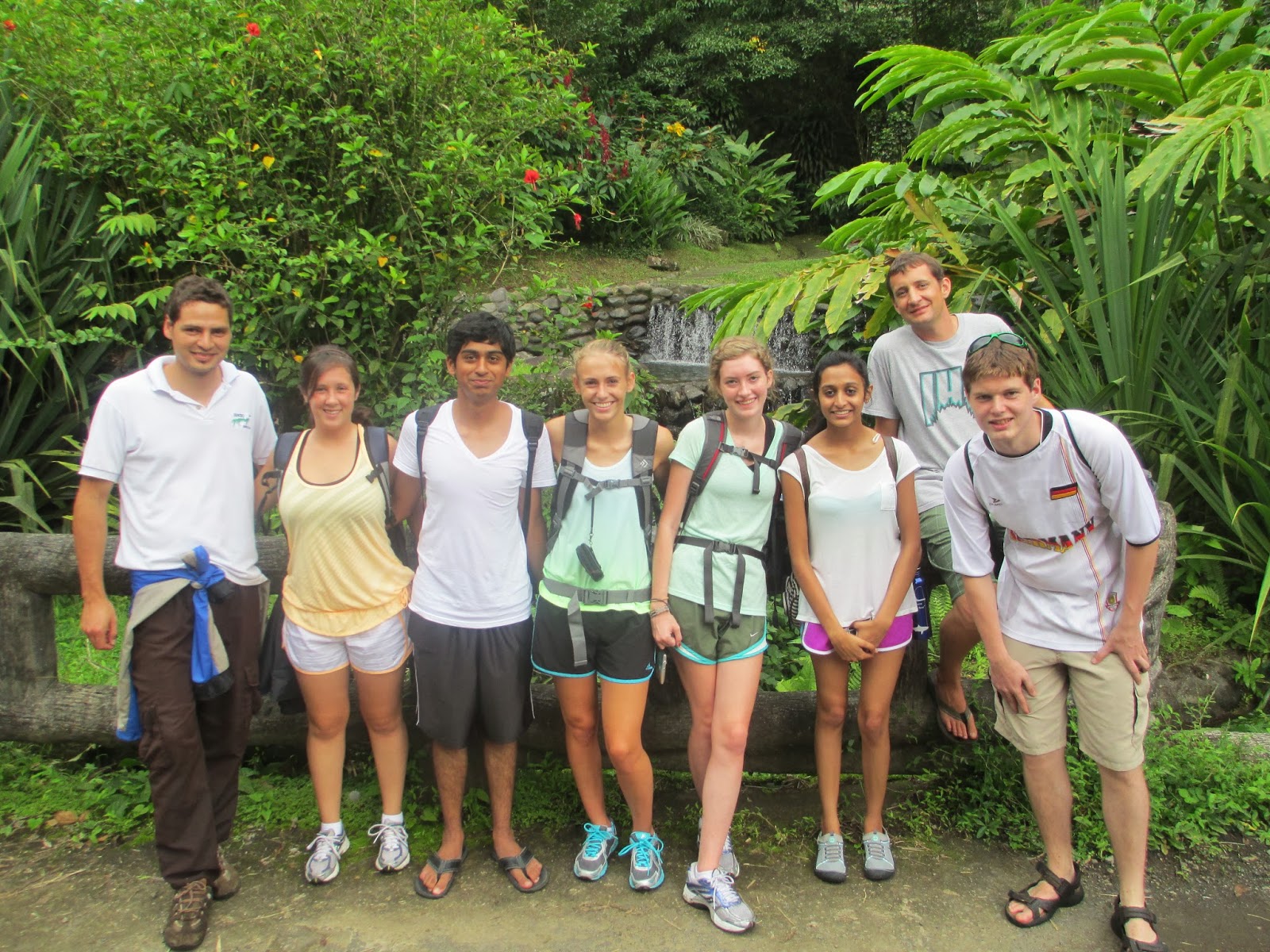


 Day 4: We grabbed an early breakfast in anticipation of a 6 AM
departure for the University of Georgia's campus at San Luis, Monteverde
http://www.externalaffairs.uga.edu/costa_rica/.
As the crow flies, the two places are actually quite close. But, what
separates them is the Eternal Childrens Rainforest preserve, a massive
stand of protected rain and cloudforest. But, we are not crows so its a 5
hour bus ride for us. Halfway through, the road turned to dirt and the
group got a real taste of rural Costa Rica. Dusty and tired we arrived
to Monteverde and headed down the mountain to UGA San Luis.
Day 4: We grabbed an early breakfast in anticipation of a 6 AM
departure for the University of Georgia's campus at San Luis, Monteverde
http://www.externalaffairs.uga.edu/costa_rica/.
As the crow flies, the two places are actually quite close. But, what
separates them is the Eternal Childrens Rainforest preserve, a massive
stand of protected rain and cloudforest. But, we are not crows so its a 5
hour bus ride for us. Halfway through, the road turned to dirt and the
group got a real taste of rural Costa Rica. Dusty and tired we arrived
to Monteverde and headed down the mountain to UGA San Luis. 
After a home-cooked lunch we were off on a guided hike of the nearby forest. The ecosystem around San Luis is an ecotone, or transition between two ecosystems. In this case, it is a transition between the cloud forests of Monteverde and the tropical dry forest of the northwest or Guanacaste region of Costa Rica. We were enchanted by the distinctive BONGGGG!!!!!! sound of the three wattled bell bird. Next, we spotted an emerald toucanet, a first for me.

 Day 5: Today we headed back up the mountain to Monteverde. We were off to
Monteverde National Park for a guided tour. With their high powered
monocular scopes and trained eyes, they pointed out an endless array of
biodiversity found in this distinct cloud forest ecosystem. White faced
monkeys, two-toed sloths, and the Resplendant Quetzal were all spotted.
The afternoon allowed for free time and shopping in Monteverde.
Day 5: Today we headed back up the mountain to Monteverde. We were off to
Monteverde National Park for a guided tour. With their high powered
monocular scopes and trained eyes, they pointed out an endless array of
biodiversity found in this distinct cloud forest ecosystem. White faced
monkeys, two-toed sloths, and the Resplendant Quetzal were all spotted.
The afternoon allowed for free time and shopping in Monteverde.Day 6: Today, it was an early breakfast and then back on the bus to head west and south to Uvita de Osa, to UTSI's field station at Finca Carolina. Seeing the multitude of crocodiles along the Tarcoles is always awe inspiring.
 We made it to the cabins just before a heavy
afternoon rain shower. Here, the group would have a chance to really
connect with Nature as they left their cell phones turned off and
experienced life without electricity and even without the internet!!!!
We made it to the cabins just before a heavy
afternoon rain shower. Here, the group would have a chance to really
connect with Nature as they left their cell phones turned off and
experienced life without electricity and even without the internet!!!!  Candle light and LED headlamps, and the shrieks of young people in the
real rainforest at night for the first time filled the air.
Candle light and LED headlamps, and the shrieks of young people in the
real rainforest at night for the first time filled the air.Day 7: After waking up early to the sounds of howler monkeys we were off on a brief guided tour of Finca Carolina's agroforests www.utsi.org.
 |
Day 8: Today was a day to dive deeper into the marine ecosystems found in the Uvita area. A morning boat tour with Dolphin Tours https://www.facebook.com/dolphintours revealed the beauty of the Marine Ballena national Park. We spotted bottle nose edolphins and enjoyed snorkeling along the shores of the Whale Island or Isla Ballena. That evening we travled to Ojochal where we learned about the efforts being made at Reserva Playa Tortuga http://reservaplayatortuga.org/ to protect the Olive Riddley sea turtle. They also conduct environmental monitoring of water quality and sponsor environmental education programs for the area's youths.
Day 9: After breakfast, the bus picked us up and we headed down to La Cusinga, another stellar
 example of real ecotourism. http://www.lacusingalodge.com/. Here
we enjoyed hiking their well constructed hiking trails through lush
rainforest as we descended to Playa Arco, one of the best kept secrets
in Costa Rica. We explored caves on the beach, swam and rinsed off in a
waterfall which crashes onto the beach. After a delicious lunch, we were
off on another hike-this time to the giant Ajo trees, Caryocar costaricense. At approximately 800 years old, they are some of the oldest trees in the Uvita-Ballena region.
example of real ecotourism. http://www.lacusingalodge.com/. Here
we enjoyed hiking their well constructed hiking trails through lush
rainforest as we descended to Playa Arco, one of the best kept secrets
in Costa Rica. We explored caves on the beach, swam and rinsed off in a
waterfall which crashes onto the beach. After a delicious lunch, we were
off on another hike-this time to the giant Ajo trees, Caryocar costaricense. At approximately 800 years old, they are some of the oldest trees in the Uvita-Ballena region.


 |
| A Crested Guan in Cecropoia tree at La Cusinga |
 http://www.uvitasurfcamp.com/ did a tremendous job of getting
these students comfortable on surfboards and riding waves in no time.
We then boarded the bus for a quick drive up the road to Hacienda Baru,
http://www.haciendabaru.com/just north of Dominical. Heavy afternoon rains forced us to move our zipline canopy tour to the next morning
http://www.uvitasurfcamp.com/ did a tremendous job of getting
these students comfortable on surfboards and riding waves in no time.
We then boarded the bus for a quick drive up the road to Hacienda Baru,
http://www.haciendabaru.com/just north of Dominical. Heavy afternoon rains forced us to move our zipline canopy tour to the next morning
Day 11: We enjoyed an adventure at Hacienda Baru soaring through the rainforest canopy on their zip line tour. Collared peccaries and sloths were spotted along the guided naturalist portion of the tour. After lunch, it was back to Alajuela, where a tired but satisfied group of students and their teachers would depart the next day for home.

If you would like to lead a group of students on a trip like this, get in touch with me at andrew@utsi.org.







 Posts
Posts


